Thinking about buying land in Heber Valley? A beautiful parcel can spark big plans, but with land, what you can do matters just as much as what you see from the road. If you want to build, hold acreage long term, or create a small ranch setup, you need clear answers before you buy. This guide walks you through the local factors that shape land purchases in the 84032 area so you can move forward with more confidence. Let’s dive in.
Why Heber Valley land is different
Buying land in Heber Valley is not the same as buying an existing home. In Wasatch County, zoning, growth planning, rural preservation goals, and infrastructure all play a major role in what a parcel can become.
Wasatch County’s current planning framework aims to balance responsible growth with preservation of rural character. The county also notes that every parcel or subdivision lot sits in a zoning district. That means your first step is not dreaming up the project. It is confirming the parcel’s exact jurisdiction and zoning.
Start with jurisdiction and zoning
Before you focus on views, acreage, or price, find out whether the property is inside Heber City or in unincorporated Wasatch County. That single detail affects which office handles planning and permits, and it can change your assumptions about utilities, access, and development standards.
Wasatch County includes a mix of zoning types such as Preservation, Agricultural, Residential-Agricultural, Mountain, and several overlay districts. Because of that mix, two parcels that look nearly identical may have very different build rights or site requirements.
Common parcel types in Heber Valley
Most land purchases in the area tend to fall into a few categories:
- Platted subdivision lots with a more straightforward path to building
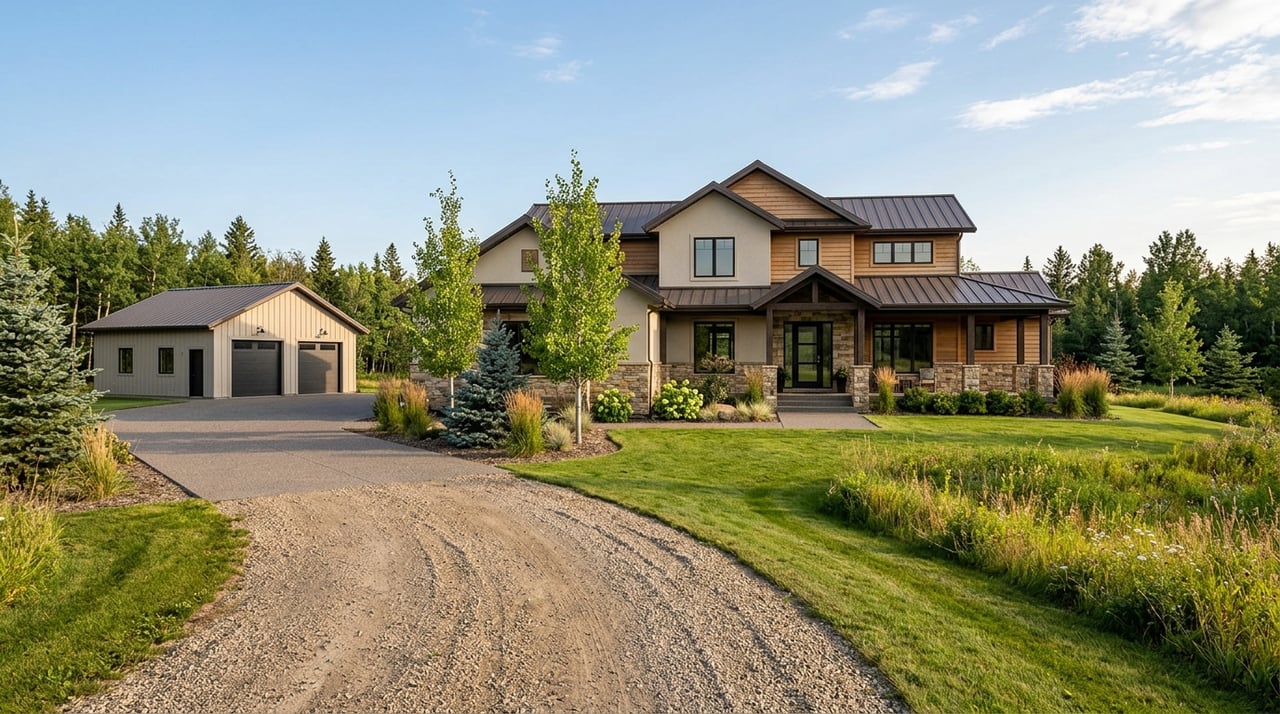
- Rural residential acreage for a custom home or lifestyle property
- Agricultural ground for agricultural or mixed residential-agricultural use
- Preservation-sensitive parcels with added limits or protections
- Parcels with overlay impacts such as geologic hazards or transitional residential rules
If your goal is a custom home, a platted or more fully serviced lot is often the simplest option. If you want more elbow room, hobby-farm potential, or a long-term land hold, acreage may fit better, but the due diligence becomes much more important.
Overlay zones can change everything
Base zoning is only part of the story. In Heber Valley, overlay zones can dramatically affect how a parcel is used and what it costs to develop.
For example, Wasatch County says the Transitional Residential Overlay Zone requires development to connect to a publicly owned water and sewer system. The Geologic Hazards Overlay Zone is intended to reduce risk to people and property on sensitive land areas. In practical terms, that means the overlay map can matter just as much as the base zoning map.
If you are comparing multiple properties, do not assume a larger parcel is the better deal. A parcel with fewer constraints and clearer utility access may offer a much smoother path to your goals.
Match the land to your intended use
The right parcel depends on what you want to do with it. In Heber Valley, your use case should guide your search from day one.
Custom home site
If you want to build a primary or second home, a platted lot or serviced parcel can reduce uncertainty. Zoning, access, and utilities may already be more clearly defined, which helps shorten the path from purchase to plans.
Small ranch or hobby-farm setup
Wasatch County’s Agricultural and Residential-Agricultural districts are designed to support agricultural pursuits and mixed residential-agricultural uses. If that lifestyle appeals to you, confirm the specific parcel’s zoning and any limits before you commit.
Recreational or legacy hold
Some buyers want open space, a long-term hold, or land with scenic value. In that case, conservation easements and open-space protections may be either a benefit or a limitation, depending on your goals.
Utilities can make or break a land purchase
Utility availability varies widely across Heber Valley. A parcel is not truly build-ready until you know how water, sewer or septic, and other infrastructure will work.
Inside Heber City, Community Development handles development review and permitting. Heber City Public Works says the city provides water and sewage collection service for city properties, which can make planning more predictable when a parcel is within city limits.
Outside the city system, the picture can change quickly. The Heber Valley Special Service District serves as the regional wastewater treatment facility for Heber City, Midway City, and portions of Wasatch County, while the Wasatch County Health Department issues permits for standard and alternative septic systems.
Sewer or septic?
This is one of the biggest questions for acreage buyers. If a parcel cannot connect to sewer, you need to know whether a health-approved septic solution is possible.
That answer should come during due diligence, not after closing. Without it, a parcel that seems perfect on paper may turn into a much more expensive or limited project.
Water rights deserve extra attention
In Utah, water rights are a major part of buying land. The state says water is public property, water-right title can be separate from the land, and many areas are closed to new appropriations.
If you are planning to build a home with a well, the Utah Division of Water Rights says you must own a water right, obtain permission to drill, and allow several months for the process. That timeline alone makes water-right review one of the most important early steps in a Heber Valley land purchase.
What to verify about water rights
During your due diligence, confirm:
- Whether any water rights are included in the sale
- Whether those rights are domestic, irrigation, or supplemental
- Whether water-right title matches the land ownership
- Whether future conveyance or change filings may be needed
- Whether your intended use depends on a well or another water source
This is one of the biggest differences between buying a house and buying acreage. You should not assume water comes with the land unless it has been clearly verified.
Access, grading, and site work matter early
Raw land often needs much more than a building permit. In Wasatch County, site work can trigger requirements for driveway access, grading, work in the county right-of-way, stormwater handling, and utility extensions.
The county says permits are required for items such as driveway and encroachment work, grading, and subdivision construction. It also states that work may not begin until a permit is approved.
For some projects, subdivision improvements may need to be completed before building permits are issued unless an early building-permit waiver is granted. Depending on the property, roads, fire hydrants, irrigation, sewer, culinary infrastructure, and power or gas infrastructure may need to be complete or bonded before construction can move forward.
Check floodplain and hazard issues early
Floodplain review should happen near the start of your process, especially if the parcel is near rivers, canals, creeks, or irrigated ground. Wasatch County says areas near waterways may fall within a Special Flood Hazard Area, and FEMA flood-hazard maps are used to manage development in designated floodplains.
This is not a small detail. Floodplain conditions can affect where you build, what studies or permits are needed, and how your project budget takes shape.
Hazard overlays also deserve close review. A beautiful parcel on the hillside or near sensitive terrain may come with added development constraints that are not obvious during a quick showing.
Do not skip survey and title review
Land boundaries and legal access should be confirmed with care. Wasatch County’s Surveyor’s Office says it serves as a resource for parcel placement and monument protection, but it does not survey private property.
That means you should expect to hire a private surveyor if boundary lines, access routes, or parcel configuration need to be confirmed. You should also review recorded easements and title matters closely, especially on larger or more rural parcels.
Watch for conservation easements
Some Heber Valley parcels may carry conservation easements or open-space restrictions. Wasatch County says these easements can preserve open space, agricultural land, natural habitat, scenic values, or public recreational values, and they may limit future development rights.
That can be a positive if your goal is preservation or long-term stewardship. It can also be a major issue if you plan to build more extensively later.
A practical Heber Valley land-buying roadmap
If you are trying to simplify the process, this is a smart order of operations:
- Confirm whether the parcel is in Heber City or unincorporated Wasatch County
- Verify base zoning and any overlay zoning
- Review water-right status and water-service options
- Confirm sewer connection or septic feasibility
- Order a survey and title review
- Check access, easements, grading, and right-of-way needs
- Review floodplain, hazard, and conservation issues
- Talk with planning, engineering, and health officials as needed
- Bring in your builder and any needed civil, septic, or well professionals
This process helps you answer the real question behind any land purchase: does the parcel support your intended use in a realistic and cost-effective way?
The biggest mistake buyers make
The most common mistake is assuming a parcel is buildable before approvals are in place. In Heber Valley, a listing may describe land in broad terms, but actual buildability depends on zoning, overlays, utilities, access, water rights, wastewater, and permitting.
Wasatch County’s subdivision instructions show how many moving parts can be involved, including stamped plans, water-company review, and in some cases stormwater, floodplain, stream-alteration, insurance, and bonding documentation. The earlier you identify those issues, the better your decision-making will be.
Why local guidance matters
Land purchases are often more complex than home purchases because so many answers depend on the exact parcel. A strong land-buying strategy includes not just market insight, but a clear plan for investigating development potential before you close.
If you are buying from out of the area, this matters even more. The right guidance can help you compare parcels more effectively, ask better questions, and avoid wasting time on land that does not fit your goals.
Whether you are searching for a custom home site, a hobby-farm parcel, or a long-term legacy property in Heber Valley, it helps to work with someone who understands both the lifestyle and the practical side of Utah land. If you want help identifying opportunities and navigating the next steps, connect with Trey Leonard.
FAQs
What should you check first when buying land in Heber Valley?
- Start by confirming whether the parcel is inside Heber City or in unincorporated Wasatch County, then verify the exact zoning and any overlay districts.
Why do water rights matter when buying acreage in Heber Valley?
- Water rights can be separate from the land in Utah, and if you plan to use a well, you may need to own a water right and obtain permission to drill.
Can every vacant parcel in Heber Valley be built on?
- No. Buildability depends on zoning, overlays, access, water, wastewater, floodplain conditions, and required permits or approvals.
How do you know if a Heber Valley parcel needs sewer or septic?
- You need to verify whether the parcel can connect to a sewer system or whether the Wasatch County Health Department can approve a septic solution.
What is an overlay zone on land in Wasatch County?
- An overlay zone adds extra rules or requirements on top of the base zoning, such as utility connection requirements or hazard-related development limits.
Should you get a survey before buying acreage in Heber Valley?
- Yes. A private survey can help confirm boundaries, access, and parcel layout because the county does not survey private property for buyers.